Translator Guide

Tips, guides, and information about certified translation and legal document translation services.

Perbandingan penerjemah tersumpah vs Google Translate
Translator Guide

Sworn Translator vs Google Translate: Why They’re Not the Same

With Google Translate and other AI-powered translation tools getting more capable by the day, it’s a fair question: why bother with a sworn translator when something free and instant is right there? The comparison between a sworn translator vs Google Translate matters, especially for official documents — because the two serve completely different needs, not just a question of “which one is better”. This article explains why they can’t simply be treated as interchangeable. Google Translate: Fast, Free, But No Legal Weight Google Translate and similar tools are genuinely useful for everyday needs — understanding a foreign-language email, reading an article, or casual communication. Legally, though, machine-translated output isn’t recognised by government agencies, notaries, courts, or embassies as a valid document. There’s no signature, seal, or accountable decree number behind it. That’s a world apart from a sworn translator, who is officially appointed by the Minister of Law and Human Rights and whose work is recognised as legally binding. If you’re not familiar with this status yet, start with What Is a Certified Translator and Why You Need One. This difference isn’t really about “machine vs human” — it’s about who’s legally accountable for the translation. Google Translate can’t be […]
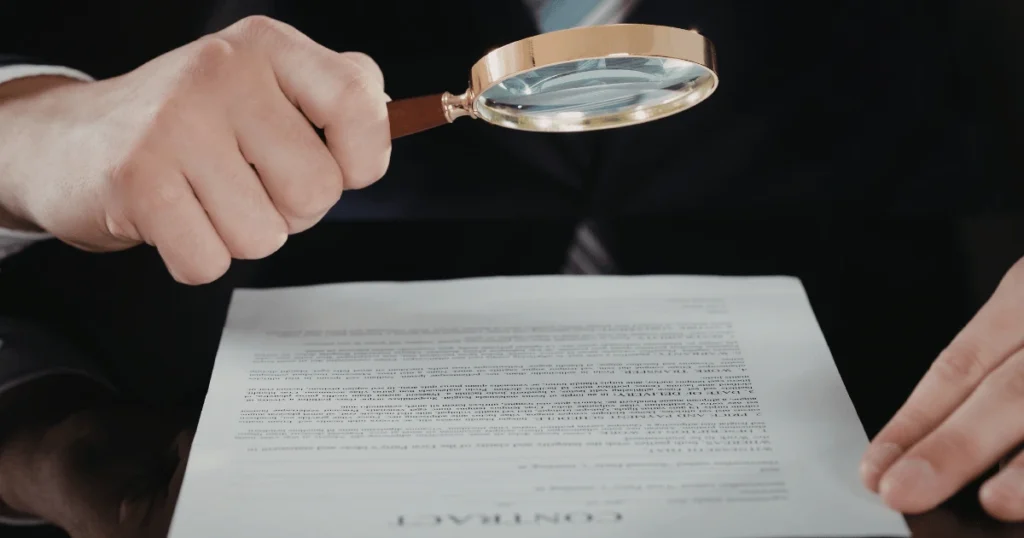
Ciri-ciri jasa penerjemah tersumpah terpercaya untuk menghindari penipuan
Translator Guide

Signs of a Trustworthy Sworn Translation Service (Avoid Scams)

As demand grows for official documents needed for visas, university applications, and international business, demand for sworn translation services has grown right along with it — unfortunately, that also opens the door for people who claim to be “sworn” when they aren’t. Knowing the signs of a trustworthy sworn translator upfront can save you from rejected documents, wasted money, and outright scams. This article rounds up what to check before committing to a particular translation service. Why Choosing a Trustworthy Sworn Translator Matters A sworn translator isn’t just a fancy label — the status carries legal weight, since their translations are recognised as valid by government agencies, notaries, and courts. If you end up using a service that isn’t genuinely sworn, the risk isn’t just questionable translation quality — it’s a rejected document, wasted time, and money already paid that’s gone for nothing. For the basics of this status, see our article What Is a Certified Translator and Why You Need One. Because the term “sworn translator” isn’t tightly protected in public spaces, technically anyone can claim this status on a website or business card without ever being officially appointed. That’s exactly why knowing the signs of a trustworthy sworn

Translator Guide

How to Verify a Sworn Translator Is Officially Registered with Kemenkumham (AHU Online)

Before handing over an important document for translation, it’s worth knowing how to verify a registered sworn translator first. “Sworn” status should be openly verifiable through an official government database, not just taken on faith from a website claim or a business card. This article walks through the steps for verifying a sworn translator’s status via AHU Online, the official portal of Indonesia’s Ministry of Law and Human Rights (Kemenkumham). This verification step is actually simple and doesn’t take much time, but it’s often skipped because people assume anyone calling themselves a “sworn translator” must already be officially registered. In practice, though, this is one of the most common points where problems surface later, once the document is processed further by an official institution. Why Does Confirming a Sworn Translator’s Official Status Matter? A sworn translator is one officially appointed by the Minister of Law and Human Rights, authorised to translate official/legal documents with legal weight recognised by government agencies, notaries, and courts alike. Because that status carries legal consequences, it’s important to make sure the translator you use is genuinely registered — especially for documents intended for official institutions, courts, or purposes like an apostille. For individuals, the fallout

Ilustrasi dokumen yang bisa diajukan apostille di Indonesia
Translator Guide

Which Documents Can Be Apostilled in Indonesia?

Once you understand what an apostille is, the next question that usually comes up is: which documents are actually eligible for apostille in Indonesia? Not every type of document can be apostilled, and knowing the categories upfront will save you a lot of time before you start the application process. This article rounds up the document types commonly apostilled in Indonesia, along with a few that aren’t. Knowing these categories matters not just to avoid rejection, but also to plan your timeline more realistically. Some documents may need additional legalisation from the issuing agency before they can be submitted for apostille, which can make the whole process take longer than expected if it isn’t prepared for in advance. Common Categories of Documents Eligible for Apostille In general, apostille documents in Indonesia processed through Ditjen AHU at Kemenkumham fall into two broad categories: personal/civil documents and business/corporate documents. Both categories require the document to be a public document, or one issued/certified by an authorised official or agency — not a personal document that has never been legalised at all. The term “public document” here follows the definition used in the Apostille Convention itself — covering administrative documents, notarial documents, court rulings,

Ilustrasi penerjemah tersumpah untuk dokumen apostille
Translator Guide

Can Any Sworn Translator Handle Apostille Documents?

Many people assume any sworn translator can handle apostille documents — as long as they have a seal and a decree of appointment, the document is bound to be accepted. In reality, there are a few specific things worth checking when choosing a sworn translator for a document that will go through the apostille process, so it doesn’t get rejected or need to be redone from scratch. This article covers what separates an ordinary sworn translator from one who’s genuinely ready to handle your apostille documents. What Does a Sworn Translator Have to Do with an Apostille? An apostille certifies the authenticity of a signature and the capacity of the official who issued the document — including, in many cases, a sworn translator’s signature on an official translation. That means when a translated document is going to be apostilled, verifying the translator’s official status becomes a key part of the process. For the basics of what an apostille is, see our article Apostille for Indonesian Documents: What It Is and How It Differs from Ordinary Legalisation. Picture this scenario: your birth certificate has been translated into English by someone claiming to be a sworn translator, but it turns out their

Ilustrasi apostille dokumen Indonesia dan bedanya dengan legalisasi biasa
Translator Guide

Apostille for Indonesian Documents: What It Is and How It Differs from Ordinary Legalisation

Since Indonesia officially joined the Apostille Convention in 2022, the term “apostille” has come up more and more often when handling documents for use abroad — whether for further education, employment, marriage, or business expansion. Yet many people still confuse an apostille for Indonesian documents with the ordinary legalisation process they’ve long been familiar with. This article covers what an apostille is, how it differs from ordinary legalisation, and when your documents actually need one. What Is an Apostille? An apostille is an authentication certificate for public documents that’s recognised among member countries of the Apostille Convention (the 1961 Hague Convention), meaning the document is legally accepted in the destination country without any additional layered legalisation process. With a single apostille certificate, an official Indonesian document can be used directly in another member country — no need to stop by that country’s embassy first. In Indonesia, the authority to issue apostilles sits with the Ministry of Law and Human Rights (Kemenkumham) through the Directorate General of General Legal Administration (Ditjen AHU), and applications can be submitted online via the official portal apostille.ahu.go.id. In simple terms, think of an apostille as an “internationally recognised stamp” confirming that the signature, seal, or

Illustration estimating how long document translation takes
Translator Guide

How Long Does Document Translation Take? A Realistic Estimate

How long does document translation take is usually the second question that comes up right after cost, especially if you’re racing a deadline for a visa application, university admission, or some other legal process. Unfortunately, there’s no single number that applies to every document — turnaround time depends on page count, complexity, and how urgent your request is. This article covers realistic time estimates and the factors that shape them. Why Does Turnaround Time Vary So Much? Just like cost, translation turnaround time is project-based. A single-page document with a standard format (like a birth certificate) is obviously much faster to complete than a business contract running dozens of pages with complex legal terminology. Even a fast certified document translator still needs enough time to ensure accuracy — speed should never come at the expense of quality control. It’s worth understanding that a certified translator carries legal liability for every piece of work they produce, so they can’t afford to rush carelessly no matter how tight your deadline is. You can review the professional standards and code of ethics for certified translators in Indonesia through Himpunan Penerjemah Indonesia (HPI) — understanding these standards helps set realistic expectations for what counts

Ilustrasi penerjemah teknis otomotif untuk perusahaan
Translator Guide

Why Automotive Companies Need a Specialised Technical Translator

Many automotive companies still treat document translation as work anyone with decent foreign-language skills can handle. In reality, an automotive technical translator is a distinct specialty, quite different from translating general content — and using the wrong translator can directly affect manual quality, workplace safety, and even your company’s reputation with business partners. This article covers why automotive companies need a specialised technical translator rather than a general one. What Sets an Automotive Technical Translator Apart from a General Translator? A general translator can be highly skilled in both the source and target languages, yet still lack an understanding of the mechanical context, industry-standard terminology, or writing conventions used in automotive technical documents. An automotive technical translator, by contrast, understands how terms like component codes, torque specifications, and repair procedures are actually written and read by technicians on the shop floor — not just translated word-for-word from a general dictionary. This distinction matters because automotive documents are used directly in daily operations: service manuals are read by workshop technicians, spare parts documentation is used by warehouse staff, and regulatory compliance documents are reviewed by relevant authorities. Even a small translation error can lead to the wrong procedure being followed on

Translator Guide

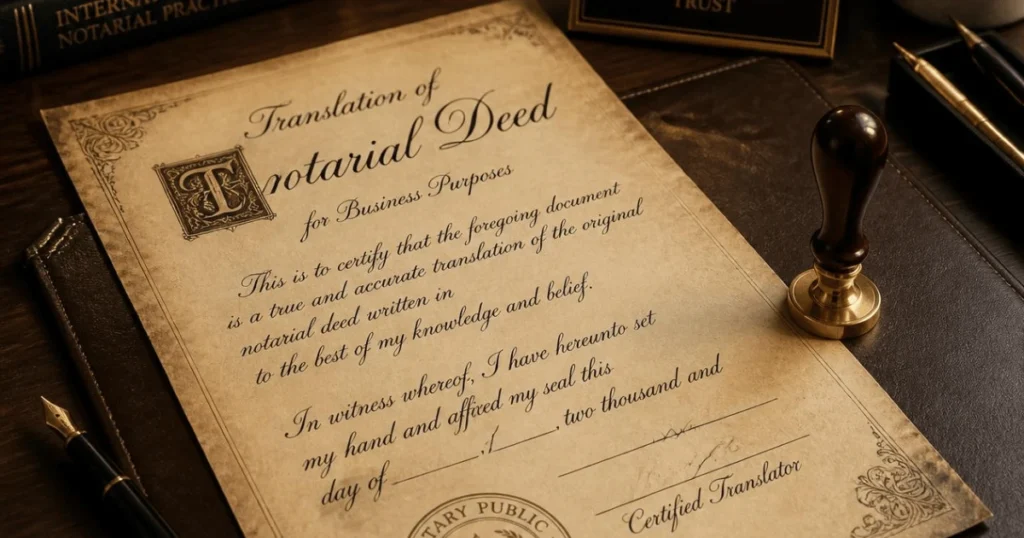
A Guide to Notarial Deed Translation for Business

Companies forming partnerships with foreign partners, opening branches abroad, or needing legal documents for international investors will sooner or later need notarial deed translation for business purposes. Notarial deeds — from company incorporation deeds to sale and purchase agreements — are documents with direct legal consequences, so even the smallest translation error can affect the validity of your business transaction. This article covers the types of notarial deeds commonly translated for business needs, what to watch out for, and how to choose the right translator for documents this important. Why Do Notarial Deeds Need a Certified Translator? A notarial deed is an authentic document drawn up by an authorised official and carries full evidentiary weight under the law. When this deed needs to be used across borders or handed to a foreign business partner, its translation also needs to preserve an equivalent legal status — and that’s only achievable through a certified notarial deed translator who is formally authorised, not a regular translator. Notaries and official authorities in the destination country generally only accept translations bearing a certified translator’s stamp and signature as proof of validity. Without it, your notarial deed — even if the content is entirely correct —

Illustration of study abroad document translation for diplomas
Translator Guide

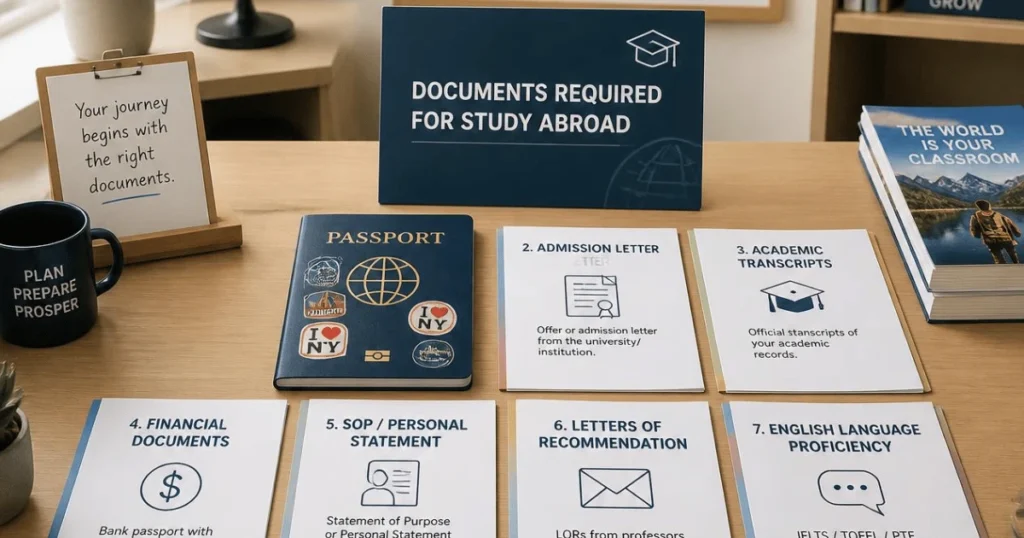
Documents Required for Study Abroad Document Translation

Getting accepted into your dream university abroad is a proud moment, but before you can officially enrol, there’s one administrative step that needs careful preparation: study abroad document translation for your diploma and other supporting documents. Universities abroad almost always require academic documents in their official language, translated by a certified translator — not a self-translation, and definitely not the output of a translation app. This article covers which documents typically need to be translated for university admission abroad, plus the legalisation steps you should prepare for. Why Do Universities Abroad Require Official Translation? Admissions committees at universities abroad need to verify the authenticity and equivalence of your education, and they rely on official translation to do that. A translation produced by a certified translator is considered credible because the translator is legally accountable for the accuracy of their work — unlike a self-translation, which risks being seen as biased or inaccurate. Beyond credibility, many universities also explicitly state a “certified translation” requirement in their admissions guidelines, so documents that don’t meet this standard risk being rejected at the initial verification stage, before your application is even reviewed by the academic admissions committee. Some universities even require the translation to