Translator Guide

Tips, guides, and information about certified translation and legal document translation services.

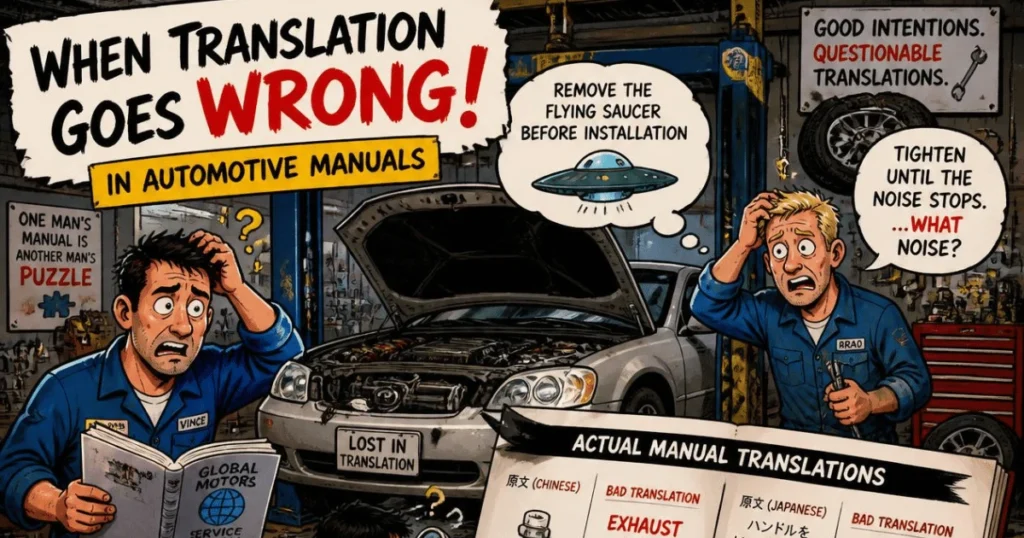
Illustration of common automotive manual translation mistakes
Translator Guide

5 Common Automotive Manual Translation Mistakes and How to Avoid Them

Service manuals, spare parts catalogues, and technical automotive documents share one thing in common: they’re packed with specific terminology that’s easy to get wrong if translated by someone unfamiliar with the industry. Automotive manual translation mistakes aren’t just a matter of slightly clumsy grammar — in the real world, they can lead to incorrect repair procedures, denied warranty claims, and even risks to technician safety. This article covers the 5 most common mistakes and how to avoid them. Why Automotive Manual Translation Needs Special Attention Automotive manuals aren’t marketing content that can be interpreted loosely — every instruction, torque specification, and part code needs to be translated with high precision because it will be used directly by technicians in the field. Unlike translating general content, an automotive technical translator needs to understand the mechanical context behind the terms they’re translating, not just translate words literally. Professional translation standards in Indonesia, including competency in technical translation, are regulated and certified by Himpunan Penerjemah Indonesia (HPI). Choosing a translator who understands these professional standards helps ensure your translation is not only linguistically accurate, but also follows the conventions expected of technical documentation. 5 Common Automotive Manual Translation Mistakes Here are the five […]
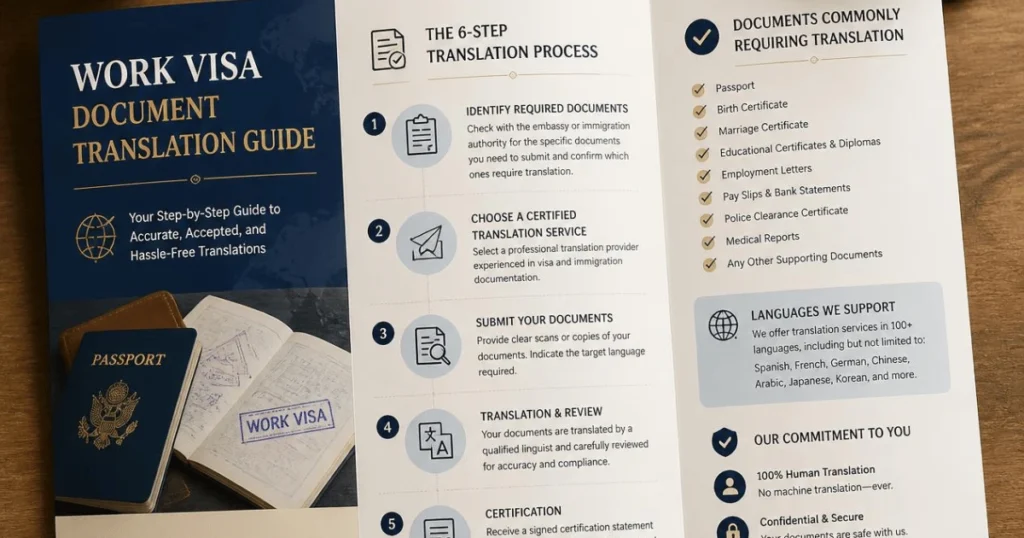

Illustration of a work visa document translation guide
Translator Guide

Work Visa Document Translation: A Complete Guide

Getting a job offer abroad is exciting news, but before you can head off, there’s one administrative step that’s often underestimated: preparing work visa document translation. Embassies and immigration authorities in the destination country almost always require supporting documents in their official language, translated by an authorised translator — not a self-translation, and definitely not the output of a translation app. Even a small mistake at this stage can delay your visa process by weeks. Why Do Work Visa Documents Need Official Translation? Many countries require supporting documents for work visas to be translated by a certified translator so they carry legal weight and are formally recognised by local immigration authorities. A translation done carelessly — especially raw machine-translation output with no review — risks containing terminology errors that could make immigration officers doubt the document’s validity. There’s also a practical reason behind this: visa officers at embassies or consulates typically aren’t native Indonesian speakers, so they rely on the official translation to verify your identity, educational background, and history. The clearer and more accurate the translation, the faster their verification process goes. Documents Typically Required for Work Visa Applications Exact requirements vary by country and job type, but here

Illustration of what a certified translator is and its role for official documents
Translator Guide

What Is a Certified Translator and Why You Need One

What is a certified translator? Put simply, a certified translator (also known in Indonesia as a “sworn translator”) has passed an official qualification exam and been formally sworn in, giving them the authority to produce translations with legal weight recognised by government agencies, notaries, embassies, and universities abroad. Unlike a regular translator, a certified translator’s work carries an official stamp and signature as proof of its validity. This article covers the full definition, the legal basis behind it, and why your document might actually need a certified translator — not just any translator. The Full Definition of a Certified Translator A certified translator (sworn translator) is a professional translator who has passed a qualification exam and been formally sworn in by the relevant authority. Once appointed, they’re entitled to stamp and sign every document they translate — proof that the translation is valid and legally accountable. This status is different from simply being “fluent in a foreign language.” A certified translator carries legal responsibility for every word they translate, which is why the appointment process is far stricter than for a regular translator. The Legal Basis and Appointment Process In Indonesia, becoming a certified translator requires passing a translator qualification

Guide to choosing the right legal translation company
Translator Guide

How to Choose the Right Legal Translation Company

Choosing the wrong vendor for legal document translation can have serious consequences: a document rejected by a notary, a delayed visa process, or even a business contract with mistranslated terms that ends up in a dispute. That’s why picking the right legal translation company is not a decision to make lightly. This article rounds up the practical criteria you can use to evaluate a potential vendor before handing over your important documents. Why Choosing a Legal Translation Company Isn’t Something to Rush Legal documents — notarial deeds, business contracts, court rulings, corporate documents — carry direct legal consequences if translated incorrectly. A single mistranslated term in a contract clause can shift the meaning of a party’s obligations entirely. Unlike marketing content, which can tolerate small imperfections, legal documents demand near-perfect accuracy because they’ll be used as a legal reference. Beyond linguistic accuracy, legal documents also require an understanding of legal context on both sides — the source language and the target language. Legal terms often don’t have an exact equivalent across languages, so a translator needs to know how to convey the legal intent, not just translate word for word. This is exactly why hands-on legal experience matters far more

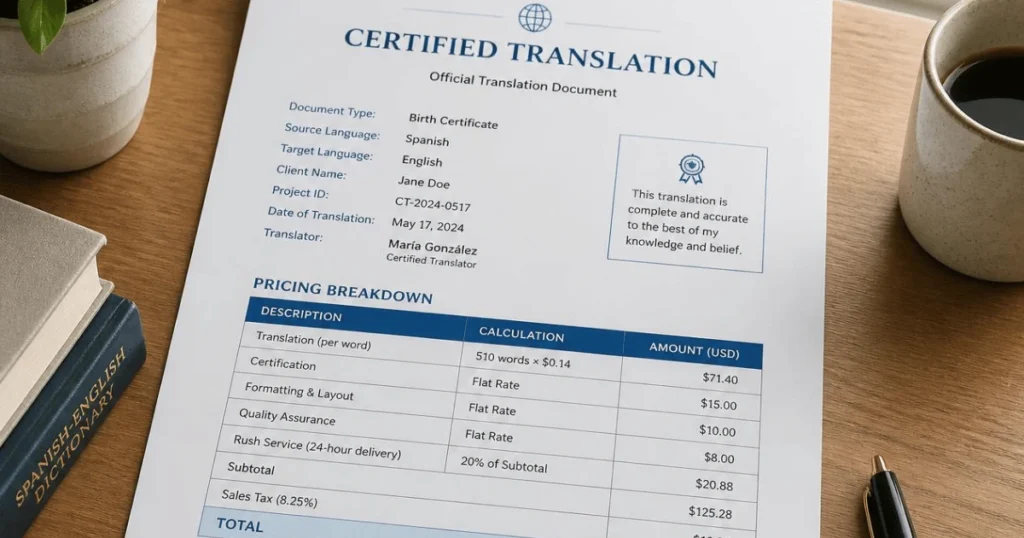
Illustration of certified translator service costs per page
Translator Guide

How Much Does Certified Translation Cost? Key Pricing Factors

“How much does certified translation cost?” is one of the most common questions we get from prospective clients. Unfortunately, there’s no single number that applies to every situation — certified translation cost depends on a range of factors, from the language pair involved to how complex the document is and how urgent your deadline is. This article walks through what actually shapes that price, so you can go into your quote request with realistic expectations. Why Isn’t There a Fixed Price for Every Document? Unlike a physical product with a set price tag, certified translation is project-based. Every document is different — word count, technical terminology, tables or attachments, and the document’s final purpose all vary. That’s why most certified document translator Jakarta providers quote a price only after reviewing your document, rather than publishing a flat rate that ignores what’s actually in the file. What Determines the Price of Certified Translation? Here are the main factors that typically shape the final cost: Language pair. Indonesian-English translation is usually the most affordable, since there are simply more certified translators available. Less common languages like Japanese, German, or Dutch tend to cost more due to limited availability. Document complexity. Documents packed

Translator Guide

Certified Translator vs Regular Translator: What’s the Difference?

If you need a document translated for official use in Indonesia, you’ve probably come across the question: should you use a certified translator or a regular translator? The difference between a certified translator and a regular translator is more than just a title — it affects the legal standing of your document, who is allowed to produce it, and which institutions will actually accept it. Understanding this distinction matters, especially if your document is headed for a legal, immigration, or academic process abroad. This article breaks down the certified translator vs regular translator question in full, plus when you should use each type so your document sails through the process without a hitch. What Is a Certified Translator? A certified translator (often called a “sworn translator” in Indonesia’s legal terminology) is a translator who has passed an official qualification exam and been formally sworn in, giving their translations legal weight that is recognised by government agencies, notaries, embassies, and universities abroad. Every page a certified translator produces carries an official stamp and signature as proof of its validity. This status isn’t handed out lightly. A certified translator has to go through a fairly rigorous competency evaluation before they’re allowed to