
When a company seeks new investors or forms a partnership with a foreign counterpart, one of the first documents typically requested is a financial statement in a language they can understand. Certified financial statement translation isn’t just a formality — its accuracy shapes how a foreign party assesses your company’s financial health and credibility. This article covers why financial statements need a sworn translator, what to prepare, and how to choose the right translator.
Many companies only think about this need once an investor or foreign partner actually requests a translated financial statement, usually with a fairly tight deadline. Yet preparing translations of your key financial statements in advance — even before there’s a concrete request — can be a real edge when a partnership opportunity comes up unexpectedly.
This situation often arises because due diligence or investment negotiations tend to move quickly once both sides agree to proceed. A company starting from scratch on financial statement translation at this point risks looking underprepared, or even losing momentum because a rushed translation process is prone to errors.
Why Financial Statements Need a Sworn Translator
A financial statement is a document that becomes the basis for another party’s financial decisions — an investor deciding whether to invest capital, a bank assessing credit eligibility, a business partner deciding whether to continue a partnership. A translation error in a figure, accounting term, or footnote can change how a foreign party interprets your company’s financial condition — even risking being seen as misleading, however unintentional.
A sworn translator provides a layer of legal accountability that a regular translator or automatic translation tool doesn’t — their work is signed and sealed, meaning someone is fully accountable for its accuracy. For a document as significant as a financial statement that will underpin an investment decision, this isn’t just an administrative formality.
What’s more, some foreign investors and financial institutions explicitly require financial documents submitted during due diligence to be translated by a certified/sworn translator, not just an in-house translation. If this requirement isn’t met, the document can be rejected right at the initial review stage, before its substance is even assessed.
Financial Statement Documents Commonly Translated
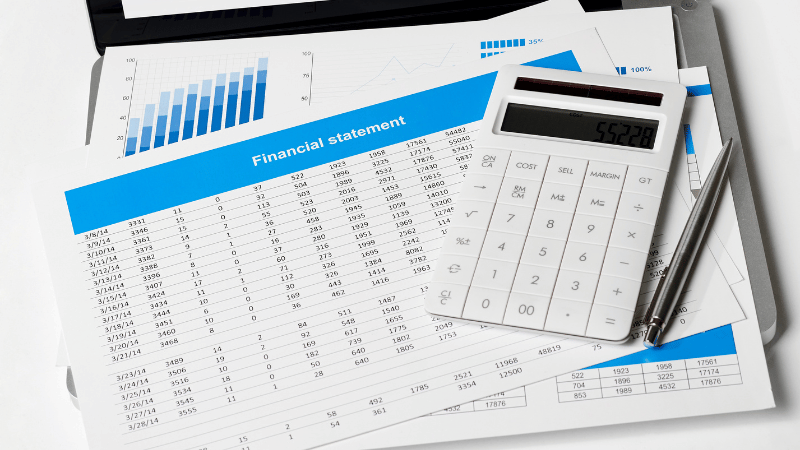
A few financial statement components typically requested by foreign parties:
- Statement of financial position (balance sheet)
- Statement of profit or loss and other comprehensive income
- Statement of cash flows
- Statement of changes in equity
- Notes to the financial statements, which often contain crucial details on accounting policies
For statements already audited by a public accountant, information on Indonesia’s audit standards and practices can be checked on the official website of the Indonesian Institute of Certified Public Accountants (IAPI) as an additional reference, especially if a foreign party asks about the audit standard used.
Not every component above is always needed at once — an early-stage (seed) investor is usually satisfied with a simple profit-and-loss statement and balance sheet, while an institutional investor or a large acquisition process typically asks for full statements going back several years, including detailed notes.

Do Financial Statements Also Need Legalising?
It depends on the intended use. For ordinary business communication with an investor or partner, a sworn translation is generally enough without needing additional legalisation or apostille. But if the financial statement becomes part of an official document submitted to another country’s authority — for instance, to set up a subsidiary entity — legalisation may be needed.
If your company is also preparing incorporation documents for business expansion, financial statements are usually requested alongside the deed of incorporation and other corporate documents — we cover this in more detail in Deed of Incorporation Translation for Business Expansion Abroad. For tax documents that may also be requested at the same time, read Business Tax Document Translation for International Business Needs.
Choosing a Translator for Financial Statements
Financial statements are packed with specific accounting and finance terminology that demands high precision — a small difference in translating terms like “current assets” vs “non-current assets”, or “liabilities” vs “equity”, can change how a reader interprets your company’s financial structure. Make sure the translator you use is genuinely experienced with corporate financial documents, not just a general translator.
Ask directly whether the translator is familiar with the applicable accounting standard terminology (both Indonesian PSAK and international IFRS), since financial statements translated for foreign investors often need terms adjusted to a standard more familiar to them, without changing the original meaning.
If your company regularly deals with foreign investors or partners, it’s worth building a long-term working relationship with one translation provider who already understands your company’s financial statement format and style. This isn’t just about convenience — a translator familiar with your statements over time can work faster and more consistently than having to explain context from scratch every time an urgent need comes up.
Mistakes to Avoid
A few common mistakes when translating financial statements for investors or foreign partners:
- Using a translator unfamiliar with accounting terminology and financial reporting standards
- Numbers or decimal formatting not adjusted to the destination country’s convention (e.g. period vs comma for thousands)
- Notes to the financial statements overlooked or translated incompletely, despite often containing crucial information
- Not checking whether the statement needs legalising before submission to the destination country’s authority
Because financial statements directly influence another party’s financial decisions, a small mistake can have a big impact on investor trust or the smoothness of your business negotiation.
Interestingly, many of the mistakes above aren’t really about a translator’s language ability, but rather a lack of specific experience in the finance/accounting field. A translator can be highly fluent in English yet still risk mistranslating technical terms if they’ve never handled a financial statement before — this is why specific experience matters far more than general language fluency alone.
Conclusion
Certified financial statement translation is an important investment when your company faces investors or foreign partners. Make sure to use a translator experienced with accounting terminology, check the legalisation requirement based on intended use, and prepare this document well before it’s actually requested so you’re not scrambling near a negotiation deadline.
STAR Software Indonesia has experience handling certified legal translation services for financial and corporate documents. Get in touch with our team for a consultation on your company’s needs, from a single financial statement through to ongoing needs for a long-term investor relationship.
Why do financial statements need a sworn translator?
Because financial statements become the basis for another party’s financial decisions, and a sworn translator provides a layer of legal accountability for translation accuracy that a regular translator lacks.
Which financial statement components are commonly translated?
The statement of financial position (balance sheet), statement of profit or loss, statement of cash flows, statement of changes in equity, and notes to the financial statements.
Do translated financial statements need legalising?
Not always. For ordinary business communication, a sworn translation is enough. For official documents submitted to another country’s authority (e.g. setting up a subsidiary), legalisation may be needed.
What should I look for when choosing a financial statement translator?
Make sure the translator is experienced with accounting terminology and familiar with applicable financial reporting standards (both PSAK and IFRS), not just a general translator.