
Employing foreign workers in Indonesia involves a fairly strict administrative process, and one part companies often underestimate is that foreign worker documents required for translation are part of the permit process. A mistake or oversight in translating supporting documents can hold up the work permit process, and even carry legal risk for both the company and the foreign worker involved. This article rounds up which documents must be translated and what to watch out for.
HR or legal teams handling foreign worker recruitment for the first time often focus on the main permit steps (RPTKA, notification) and overlook that nearly all foreign-language supporting documents also need to go through an official translation process. A gap at this point can turn what should be a smooth process into a weeks-long delay.
The Legal Basis for Foreign Worker Employment in Indonesia
Employing foreign workers in Indonesia is regulated by the Ministry of Manpower (Kemnaker), with a permit process involving a Foreign Worker Utilisation Plan (RPTKA) and related work notification/permits. The employing company is responsible for making sure all foreign worker documents are complete and valid, including originally foreign-language documents that need translating into Indonesian. Official information on requirements and the application process can be found on the Ministry of Manpower’s TKA Online portal.
Since labour regulations can be updated over time, it’s best to check current requirements directly on the official portal or consult a labour law consultant before starting the foreign worker permit process.
This process usually involves coordination between several parties — the employing company, the foreign worker in question (who may still be in their home country while documents are being prepared), and the translation provider. Clear communication among these three parties matters so documents sent from abroad match the format needed for translation and processing in Indonesia.
Foreign Worker Documents That Must Be Translated
A few documents that generally need translating into Indonesian as part of the foreign worker permit process:
- The foreign worker’s passport and visa pages
- Diplomas and skill/competency certificates from their home country
- Work experience letters or a CV used as the basis for qualification assessment
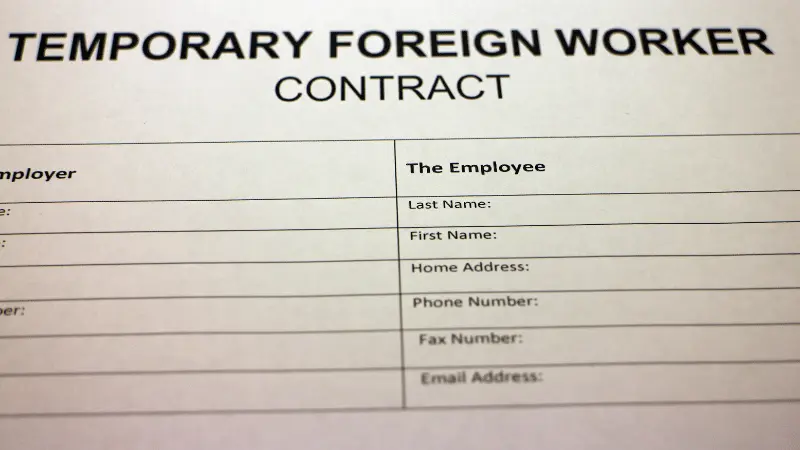
- Employment contracts or assignment letters from the parent company (if the worker is sent from an overseas head office)
- Other supporting documents required depending on the job type and industry sector
For diplomas and education certificates that may also need apostilling from the foreign worker’s home country (not Indonesia), the principle and procedure are similar to what we covered in Requirements and Procedure for Apostilling a Diploma for Study/Work Abroad — though in this context the direction is reversed, from the foreign worker’s home country toward Indonesia.
If the foreign worker in question also brings a spouse or family (for instance, an Indonesian-foreign national marriage), family documents like a marriage certificate may also need preparing — we covered the principle of translating cross-border family documents in Mixed Marriage Certificate Translation for Indonesian-Foreign National Couples.

Why Does It Have to Be a Sworn Translator?
Foreign worker supporting documents submitted to government institutions — including Kemnaker and the Directorate General of Immigration — generally must be translated by a sworn translator, not a regular translator or an automatic translation tool. This is because those documents become the basis for administrative and legal decisions, so their accuracy and validity must be officially accountable.
Before handing over an important document like a diploma or work contract to a translator, make sure their official status can be verified — the full guide is in How to Verify a Sworn Translator Is Officially Registered with Kemenkumham (AHU Online).
Companies employing foreign workers also often need related tax documents, for instance for foreign worker income tax reporting or company tax compliance related to foreign labour — we cover business tax document translation in more detail in Business Tax Document Translation for International Business Needs.
The Employing Company’s Responsibilities
A company employing foreign workers is fully responsible for making sure all documents are complete and valid before the permit process is submitted. A few things HR or legal teams should pay attention to:
- Making sure the foreign worker’s original documents have been legalised in their home country before translation, if required
- Keeping copies of official translations as part of the company’s personnel records
- Updating documents if the foreign worker’s status changes (contract renewal, position change, etc.)
- Coordinating with a labour consultant to ensure compliance with current regulations
For companies employing foreign workers for the first time, it’s worth building a standard document checklist upfront — covering which documents must be translated, which translation provider is used, and deadlines for each stage. A checklist like this helps make sure nothing slips through, especially if the company plans to employ more than one foreign worker in a short span.
The Risk of Neglecting Foreign Worker Documents
Failing to properly prepare foreign worker documents can lead to:
- Delayed work permit issuance, meaning the foreign worker can’t start on schedule
- Rejection of the RPTKA or notification application due to incomplete/invalid supporting documents
- Administrative sanction risk for companies employing foreign workers without a complete permit
- Legal issues for the foreign worker if their status is deemed non-compliant
Handling documents correctly from the start, including making sure translation is done by an officially registered sworn translator, is a small investment compared to the risk you’d bear if the foreign worker permit process runs into trouble.
Also keep in mind, incomplete document issues are often only discovered at the final stage of the application — for instance when a verification officer requests additional clarification. So the earlier documents are prepared and checked for completeness from the start of recruitment, the smaller the chance of unnecessary delay at the final stage.
Conclusion
Foreign worker documents required for translation cover passports, diplomas, skill certificates, and work contracts, all of which must be translated by an officially registered sworn translator to be recognised by the relevant institutions. The employing company is responsible for making sure all these documents are complete and valid, since negligence can lead to delayed work permits or even legal risk.
STAR Software Indonesia has experience handling certified legal translation services for employment documents, including foreign worker needs. Get in touch with our team for a consultation on your company’s needs, from individual foreign worker documents through to ongoing needs for larger-scale foreign worker recruitment.
What documents must be translated for foreign workers in Indonesia?
Passport and visa pages, diplomas and skill certificates, work experience letters/CVs, and employment contracts or assignment letters from an overseas parent company.
Why must foreign worker documents be translated by a sworn translator?
Because those documents form the basis of administrative and legal decisions by government institutions, so their accuracy and validity must be officially accountable.
Who is responsible for preparing complete and valid foreign worker documents?
The employing company is fully responsible for making sure all foreign worker documents are complete and valid before the permit process is submitted to the relevant institution.
What’s the risk if foreign worker documents aren’t translated correctly?
Risks include delayed work permit issuance, rejection of the RPTKA/notification application, administrative sanctions for the company, and legal issues for the foreign worker involved.